

 Meine Favoriten
 Abmelden
 Alle
Artikel online lesen
Alle
Artikel online lesen
 Weltwoche Schweiz

This was not quite like the match of the century when Hungary’s Golden team beat England 6-3 at Wembley Stadium back in 1953. But it came close. England’s 0-4 humiliating defeat by the Hungarian side last week in Wolverhampton is this nation’s worst home result since 1928!
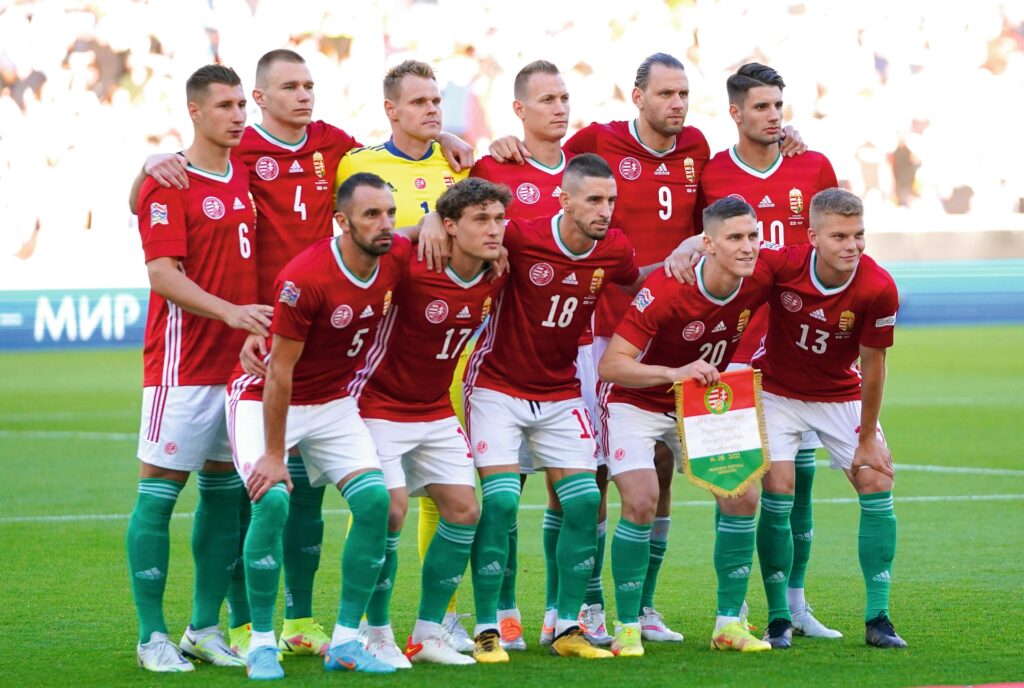
IMAGO/PA Images
The revitalisation of Hungarian football under their Italian manager Marco Rossi has been remarkable. When I watched Hungary drawing with France and with Germany during last year’s European Championship it became evident that after decades in the wilderness the team had finally come of age. This year they beat England twice in only ten days and managed a draw with Germany. They are now on top of group 3 In the Nations League Division A.
There is no Ferenc Puskás in the current Hungarian team. I love watching Dominik Szoboszlai, the team’s young midfield player, as well as Ádám Szalai, the 34 year-old stalwart striker who can always be relied on to hold up the ball. But at present, it is evident that their individual brilliance is connected with the synergy and spirit provided by a team where players play for one another.
There was something truly magical about the way that the Hungarian team stood up to the world-famous players that make up the English side. It seemed that almost effortlessly the team had rendered the English striker and super-player Harry Kane marginal and invisible. All too often football is about individual egos. The way Hungary played served as a timely reminder that when a group of players come together as a genuine team they become capable achieving great results. As Rossi noted after the game ‘every player, from the forwards to the defenders, had fought for the team in order to achieve a good result’.
It is difficult to disagree with Rossi, when he observed that ‘when the Hungarian national team is able to play as a real team, most opponents have a very difficult time if they want to beat them’.
There was something else that inspired the Hungarian team towards victory. During an interview, after the match, Hungary’s striker, Ádám Szalai stated; ‘I would like to start by saying that this match was decided in the first minute, because a fan base that does not succumb to the provocation of rival fans has already won the match’. Szalai’s statement pointed to the fact that many of the English fans at the game whistled and booed and made so much noise that the Hungarian anthem could not be heard.
Talking to Hungarian fans after the game it is evident that as far as they are concerned, they have become a target of the British media and cultural establishment. They note that the British media made no mention of the disrespectful booing of their national anthem. They are also fed up with being labelled as racist because some of them boo the taking of the knee by the English players. But what they really resent is that they are constantly lectured about their behaviour by the English football establishment. For example, the English team manager Gareth Southgate has on several occasions stated that they are trying to ‘educate’ Hungarian fans about the need to embrace anti-racist gestures, like the Black Lives Matters inspired act of taking the knee.
England’s quasi-colonial attitude towards Hungarian fans was strikingly illustrated in a recent article in The Times by Robert O’Connor, which caricatured them as hardcore bigots motivated by extreme nationalist prejudice. What Southgate and O’Connor fail to grasp is that the ethnocentric project of imposing their values on another nation’s fans can only breed resentment. It also contributed to what for many Hungarian players was their act of defiance.
Hungarian football is on the verge of becoming a serious global force. Their supporters have started dreaming about a return of the glory days of the 1950s. They have succeeded in recapturing the footballing spirit of those times. What they now need to do is to get down to the hard work of developing skills and talents of Hungary’s football hungry youth.
Frank Furedi is a Hungarian-Canadian author, social commentator and emeritus professor of sociology at the University of Kent in Canterbury. He is an author of more than 25 books, his work explores the main cultural drivers that call into question the moral status of liberty and freedom in western societies.