

 Meine Favoriten
 Abmelden
 Alle
Artikel online lesen
Alle
Artikel online lesen
 Weltwoche Schweiz

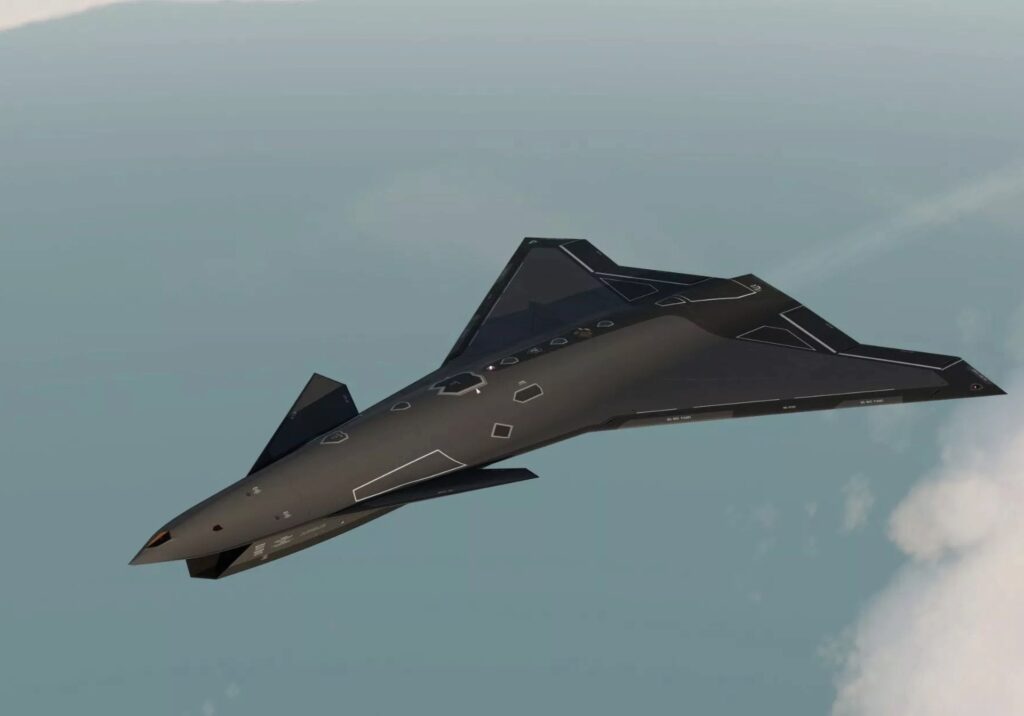
The war in Ukraine has provided a living laboratory for understanding the role of new technologies on the battlefield. In February 2022, as Russia launched its invasion, long convoys of tanks rolling toward Kyiv looked like they had been taken straight from the doctrines of World War II: massed armor, rapid penetration, and a blitz intended to crush resistance before Ukrainian defenses could consolidate. Soon afterward, however, the front became bogged down in imagery that resembled World War I: trenches, dugouts, static artillery barrages, and grinding attrition without decision.
Yet if the war in Ukraine reminded the world that traditional battlefield features remain alive, it also revealed the rise of a new and defining technology: drones. Both sides began using unmanned aerial vehicles (drones) for a wide range of purposes on the battlefield. When the Ukrainians consistently used these cheap FPV drones — worth only a few hundred dollars — to destroy Russian tanks valued in the millions, it became clear that we were witnessing a revolution.
The question is not whether drones matter — they clearly do — but whether they change the nature of war or merely its appearance. By Comparing three theaters: Ukraine, Gaza, and Israel-Iran war - the answer comes into focus: drones are a dramatic force multiplier, but not the “queen of battle". They thrive against weak defenses and exposed infrastructure, falter against strong layered defenses, and are with limited efficiency underground.
What Do We Mean When We Say “Drone”?
The term “drone” (UAV) is often used as a blanket concept, but in reality it encompasses five different categories:
The term “drone” (UAV) is often used as a blanket concept, but in reality it encompasses five different categories:
1. Micro and FPV drones — The “poor man’s silver bullet” — cheap, compact quadcopters, often off-the-shelf (like DJI) and sometimes modified to carry explosives. They deliver both ISR and strike capabilities against armored targets and vehicles.
2. Mini / Small UAVs — Weighing 2–25 kg, either hand-launched fixed-wing or larger quadcopters such as the Israeli Skylark. Provide short-range tactical intelligence at battalion or brigade level.
3. Tactical UAVs — Medium drones up to ~600 kg such as Heron 1/Hermes 450, resembling light aircraft and launched from runways or catapults. Used for extended tactical surveillance with advanced sensors.
4. Large UAVs (MALE / HALE) — Heavy long-endurance platforms (such as MQ-9 Predator, Heron) that operate at medium or high altitude, carrying advanced payloads for strategic intelligence, surveillance, and communications.
5. Combat UAVs (UCAV) — the future generation: stealth-capable, heavy-payload drones designed to operate as an independent combat support force. Examples: Reaper, X-47B, MQ-28 Ghost Bat.
2. Mini / Small UAVs — Weighing 2–25 kg, either hand-launched fixed-wing or larger quadcopters such as the Israeli Skylark. Provide short-range tactical intelligence at battalion or brigade level.
3. Tactical UAVs — Medium drones up to ~600 kg such as Heron 1/Hermes 450, resembling light aircraft and launched from runways or catapults. Used for extended tactical surveillance with advanced sensors.
4. Large UAVs (MALE / HALE) — Heavy long-endurance platforms (such as MQ-9 Predator, Heron) that operate at medium or high altitude, carrying advanced payloads for strategic intelligence, surveillance, and communications.
5. Combat UAVs (UCAV) — the future generation: stealth-capable, heavy-payload drones designed to operate as an independent combat support force. Examples: Reaper, X-47B, MQ-28 Ghost Bat.
Blurring these categories is misleading: a cheap FPV drone hitting a tank is not the same as a UCAV worth hundreds of millions. Any serious debate must first define the type of drone in question.
Classical Principles Confront Modern Technology
Two and a half millennia ago, Sun Tzu laid out principles of war that remain valid in the drone age. Without reliable intelligence - “know yourself and know your enemy” - technology is useless. Without logistics - “the army marches on its stomach” - complex systems collapse. Morale and social cohesion are as decisive as advanced weapons, and deception and surprise can matter more than weapon quality - as was proven on October 7th or in Israel’s attack on Iran.
Two and a half millennia ago, Sun Tzu laid out principles of war that remain valid in the drone age. Without reliable intelligence - “know yourself and know your enemy” - technology is useless. Without logistics - “the army marches on its stomach” - complex systems collapse. Morale and social cohesion are as decisive as advanced weapons, and deception and surprise can matter more than weapon quality - as was proven on October 7th or in Israel’s attack on Iran.
History repeatedly confirms this. Gunpowder undermined castles but produced armor. Railroads, telegraphs, and machine guns transformed 19th-century battlefields but did not guarantee decision. World War II introduced tanks, aircraft, radar, and the atomic bomb, yet its outcome rested on mass production, maneuver, and endurance, rather than any single weapon.
In the 1990s, Andrew Marshall, the legendary “Yoda of the Pentagon,” articulated the concept of a Revolution in Military Affairs (RMA): precision strike, space-based control, and information dominance would transform war. In practice, space became a critical enabler — for navigation, communication, and intelligence — but not a war-winning strike arena.
Cyber was once hailed as a promising dimension of war, with former U.S. Secretary of Defense Leon Panetta warning of a “cyber Pearl Harbor.” The 2008 Stuxnet attack demonstrated cyber’s ability to spill into the physical domain — destroying 1,000 centrifuges in Iran’s Natanz facility. Yet 25 years later, Iran had built 22,000 centrifuges, which were ultimately destroyed by old-fashioned bombs rather than by code. The lesson: technology creates opportunities, but victory still rests on doctrine, logistics, intelligence, and resilience.
Drones in Ukraine — Promise and Creativity
In Ukraine, drones have reshaped the face of warfare since the very first months of the war. Kyiv mobilized thousands of commercial DJI drones for ISR, turning them into the “eyes” of every platoon. Armed FPV drones have become the ultimate David-vs-Goliath weapon — cheap, simple, and deadly — with Western estimates crediting them for up to 60% of all strikes on Russian armored vehicles.
In Ukraine, drones have reshaped the face of warfare since the very first months of the war. Kyiv mobilized thousands of commercial DJI drones for ISR, turning them into the “eyes” of every platoon. Armed FPV drones have become the ultimate David-vs-Goliath weapon — cheap, simple, and deadly — with Western estimates crediting them for up to 60% of all strikes on Russian armored vehicles.
Russia responded with its own fleet of drone trying to paralyze the Ukrainian infrastructure and terror its population: Thousands of Iranian-made Shahed drones launched against Ukraine’s energy grid. During the winter of 2023–24, widespread blackouts occurred — not from artillery barrages, but from waves of loitering munitions slamming into power distribution nodes.
Perhaps the most striking demonstration of drone potential was Ukraine’s audacious long-range strike campaign, dubbed by media as Operation Spiderweb. Dozens of drones were launched at Russia’s strategic bomber bases, damaging Tu-95 and Tu-160 bombers, disabling runways, and generating major psychological and strategic resonance. The operation highlighted how cheap, expendable systems could inflict heavy damage on an enemy’s strategic assets and infrastructure.
Yet like all “opening blows,” the effect faded. Russia adapted, deploying stronger air defenses, jammers, and electronic warfare. Ukrainian losses mounted. Even when successful, drone raids rarely forced Moscow to alter its overall strategy. Drones proved valuable, disruptive, and creative — but not decisive.
Iran vs. Israel — When Defense Outpaces Offense
The Middle East has revealed the other side of the drone story: the limits of offensive swarms against sophisticated defenses.
The Middle East has revealed the other side of the drone story: the limits of offensive swarms against sophisticated defenses.
In April 2024, Iran launched around 140 drones at Israel. All were intercepted. By October 2024, Tehran realized the cost-benefit equation was untenable. It shifted emphasis away from drones toward ballistic missiles, believing them harder to stop.
In the 12 days war with Israel in June 2025 came Iran’s largest attempt: 1,052 drones launched in a massive strike. 1,050 were shot down — a 99.8% interception rate. Israel’s multi-layered system — Iron Dome, David’s Sling, Arrow, electronic warfare, manned interceptors, and cooperation with the U.S. and regional allies — neutralized the swarm almost entirely. The once “cheap and game-changing” delivered near-zero strategic effect.
Against Hezbollah and the Houthis, interception rates are reported at about 85% — still formidable, though leaving room for sporadic hits. But the larger pattern holds: once defenses are layered and adaptive, drone swarms lose their economic and operational advantage.
One of the most striking conclusions from comparing these two arenas is that air superiority is a critical determinant of drone effectiveness. In Ukraine, neither side achieved full dominance of the skies, allowing drones to flourish but also leaving them highly vulnerable to interception. Israel, by contrast, enjoyed air superiority both at home and over Iran, maximizing its ability to intercept incoming Shaheds while granting its own UAVs near-immunity in Iranian airspace.
Gaza and Lebanon — The Limits of Underground and Heavy Targets
Gaza revealed a core limitation of drones. While they gave the IDF clear advantages in urban battlefield, they could not deliver decisive results underground. The case of Yahya Sinwar is telling: though tracked by a surveillance quadcopter in Rafah, he was ultimately killed by a tank shell. The same applied in Lebanon, where Nasrallah and Hezbollah’s senior leadership were eliminated with bunker-busting precise bombs from manned 20 century legacy aircraft.
Gaza revealed a core limitation of drones. While they gave the IDF clear advantages in urban battlefield, they could not deliver decisive results underground. The case of Yahya Sinwar is telling: though tracked by a surveillance quadcopter in Rafah, he was ultimately killed by a tank shell. The same applied in Lebanon, where Nasrallah and Hezbollah’s senior leadership were eliminated with bunker-busting precise bombs from manned 20 century legacy aircraft.
The broader reality is clear: subterranean warfare requires a dedicated doctrine still undeveloped. Drones may support such efforts, but alone they cannot decide the fight below ground.
The Next Frontier of Drone Warfare
All that being said, the trajectory of modern warfare points unmistakably toward an increasingly unmanned future. Autonomous weapons, drone swarms, and AI-driven platforms are no longer distant concepts but central pillars of military development worldwide. The unmanned domain will expand in scale, sophistication, and independence, but the future battlespace will be defined by how effectively militaries design doctrines, technologies, and force structures that harness this trajectory.
All that being said, the trajectory of modern warfare points unmistakably toward an increasingly unmanned future. Autonomous weapons, drone swarms, and AI-driven platforms are no longer distant concepts but central pillars of military development worldwide. The unmanned domain will expand in scale, sophistication, and independence, but the future battlespace will be defined by how effectively militaries design doctrines, technologies, and force structures that harness this trajectory.
The most promising frontier lies in the “Loyal Wingman” concept, bridging manned and unmanned aviation. Fighter jets paired with autonomous or semi-autonomous drones could take on high-risk missions — scouting, ISR, or launching weapons under human supervision. Projects like Boeing’s X-45, Europe’s experimental UCAVs, and Australia’s MQ-28 Ghost Bat illustrate the model: manned aircraft commanding swarms of expendable, flexible drones to penetrate defenses and strike deep, shifting drones from independent attackers to trusted partners within a broader manned system.
Yet, the next phase will bring both threats and counters. Drone swarms guided by artificial intelligence could overwhelm defenses. However AI is still fragile: the training models are hard to deal with the complexity of war – its best strategies and coping with new technologies. It can be fooled by deception, and it falters in chaotic, novel battlefield conditions.
Meanwhile, directed-energy weapons are nearing maturity. High-energy lasers could soon intercept hundreds of drones at negligible cost. Once that threshold is crossed, the economics of drone warfare will invert: what began as cheap offense may be defeated by cheap defence and become become expensive futility.
At the geopolitical level, drones have become diplomatic tools. Iran proliferates them to Hezbollah, the Houthis, and Iraqi militias. Turkey markets its Bayraktar drones as an instrument of influence from Ukraine to North Africa. China floods global markets with low-cost systems. The United States, meanwhile, faces the tension between controlling technology exports and ceding markets to rivals. Drones are not only weapons but also instruments of international leverage.
Conclusion — A Powerful Tool, Not the Queen of Battle
Every so-called “revolution” in military affairs has met countermeasures that eroded its effectiveness. Submarines in World War I nearly strangled Britain — until convoys and sonar neutralized them. Strategic bombing in World War II promised a shortcut to victory — until German air defenses imposed heavy costs. Ballistic missiles appeared unstoppable — until layered defenses emerged. Nuclear weapons reshaped strategy but did not end war, instead producing mutual deterrence.
Every so-called “revolution” in military affairs has met countermeasures that eroded its effectiveness. Submarines in World War I nearly strangled Britain — until convoys and sonar neutralized them. Strategic bombing in World War II promised a shortcut to victory — until German air defenses imposed heavy costs. Ballistic missiles appeared unstoppable — until layered defenses emerged. Nuclear weapons reshaped strategy but did not end war, instead producing mutual deterrence.
Drones follow the same trajectory. They have changed the face of war: shortening kill chains, providing continuous ISR, creating cheap harassment options, and generating psychological impact. But they have not changed its nature.
In Ukraine, drones helped a weaker state survive against a stronger aggressor. In Israel, the Iranian attacked collapsed against multi-layered defenses. In Gaza and Lebanon, they proved irrelevant against underground networks and bunkers. They are critical enablers, not decisive war-winners.
Drones are here to stay, but as part of a larger architecture: intelligence, command and control, logistics, air superiority, and heavy kinetic strike. Those who mistake them for a silver bullet will be disappointed. Those who integrate them smartly will gain an advantage — until the next countermeasure arrives.
Amos Yadlin was head of the IDF's military intelligence service from 2006 to 2010. He then headed the Institute for National Security Studies (INSS) in Tel Aviv from 2011 to 2021. He is one of
Israel's most renowned security experts.