

 Meine Favoriten
 Abmelden
 Alle
Artikel online lesen
Alle
Artikel online lesen
 Weltwoche Schweiz

Yes, Italy will be governed by a centre-right executive led by Giorgia Meloni's ‘Brothers of Italy’ (the party that Meloni founded ten years ago, which got just 4 per cent at the last general election, leads all the opinion polls). No, there will be no 'fascism danger'. There’s nothing ‘fascist’ about Meloni by any reasonable understanding of the term and the threat is evoked and branded only by the progressive press and some parties in crisis of readers and votes (Italy does have two openly fascist parties – Forza Nuova and Casa Pound – which polled less than 1 per cent at the last general election and disappeared). And the chances of the next government lasting five years are very low, given the historical instability and the chronic parliamentarianism of Italian democracy.
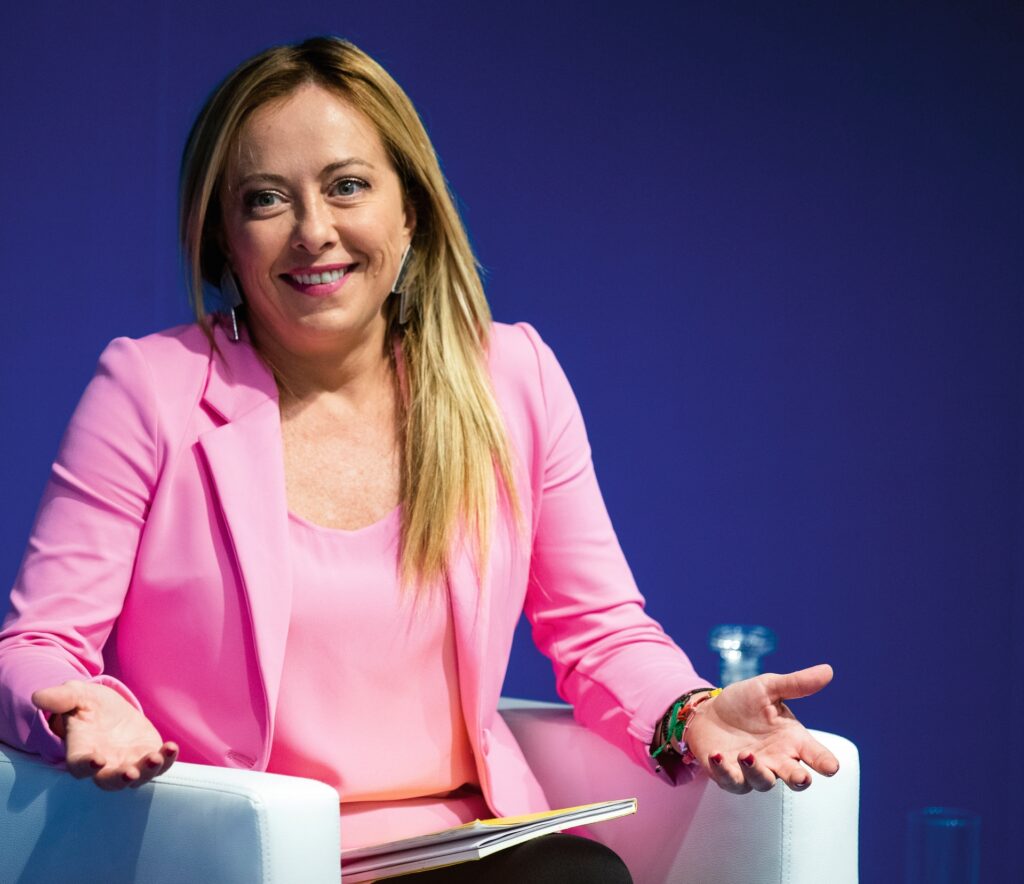
Avalon All rights reserved.
Meloni's is the classic European identitarian party, much more similar to Viktor Orban in Hungary than to Marine Le Pen's nationalistic model in France. The leader of 'Fratelli d'Italia' has given signals that she does not want to tear herself away from Italy's pro-European line and that she does not want to pursue policies that jeopardise fragile public finances.
Facing a winter that will be punctuated by a very serious energy crisis, Meloni is aware that she will govern economic ruins, a period of intense social discontent. Meloni will need money and help from the European Union and the eurocrats that in 2019 she slammed as agents of “nihilistic global elites”.
There will be friction and clashes, because Meloni has hinted that she wants to claim some 'sovereignty' for Italy (“fun is over”, Meloni said). But it will be more a tug-of-war in the style of Hungary. The same for Nato alliance: Italy will continue the old pro-Atlantist tradition that dates back to 1946 (Meloni voted in favor of sanctions against Russia and sending of arms to Ukraine). Indeed, the first two points of the centre-right coalition’s agenda are the “full adherence to the European integration process” and “respect for Italy’s international alliances”.
A right-wing victory will impose economic adjustments in a more protectionist way, expecially compared to the line taken by Mario Draghi (lower taxes are Meloni’s priority). But Italy is a country with a public debt of 40.000 euros per capita, a tax burden equal to 43.3% of GDP, its average age of is the third oldest in the world together with one of the lowest birthrates on the planet and the highest social welfare spending-to-GDP ratio in the Western world. It is also a country where pensions account for one-third of all public spending and where the percentage of pensioners in proportion to workers will rise from 37% today to 65% in 2040 (from three workers who support one pensioner to three workers who support two pensioners). This is to say that, unless it wants to leave the eurozone, Meloni’s freedom for maneuver is very limited.
On immigration, Meloni will seek a clampdown on the NGOs active in the Mediterranean and might try to make agreements with the countries of origin of the migration routes (Tunisia and Libya) to slow down the flows (100.000 migrants are expected in Italy at the end of 2022 and almost 1 million landed here since 2012). But, as for the economy, it is easier to announce than to stop immigration.
On July 26, 2019, Matteo Salvini (then Italy’s minister of interior) called for stopping the disembarkation of migrants aboard the Gregoretti ngo as it was reaching Sicily's east coast. "I have given instructions that no port will be assigned before there is a redistribution across Europe of all 140 migrants on board on paper," Salvini said. Immediately after it landed, an Italian public prosecutor opened a file against Salvini for “kidnapping”. The European Court of Human Rights (ECHR) also condemned the Italian government and ordered it to pay thousands of euros to two dozen immigrants it deported to Libya. Italian authorities had intercepted the migrants in the Mediterranean when they were trying to get to the Italian island of Lampedusa from Libya. The European Court again condemned the Italian government for deporting migrants.
If Meloni really does what she promises about immigration (naval blockade), she will clash with Brussels, Italian and European judges. But there is an old saying in Italy: “revolutions are impossible, we all know each other”.
It is realistic to think that, in the wake of Orban, Meloni will aim to redistribute some public money for birth incentives (Italy is in the midst of a demographic suicide that has been going on for 30 years and its population is expected to decline from 60 million to 40 million by the end of the century). The right-wing coalition will also fight against ideological educational adventurism, such as gender in schools.
The next Italian government can try to reverse Titanic's course. But knowing that the lifeboats on board are not enough.
Giulio Meotti writes for Il Foglio newspaper, is a contributor for the Gatestone Institute and Israel National News and author of several books on Europe, Islam and Christianity.