

 Meine Favoriten
 Abmelden
 Alle
Artikel online lesen
Alle
Artikel online lesen
 Weltwoche Schweiz

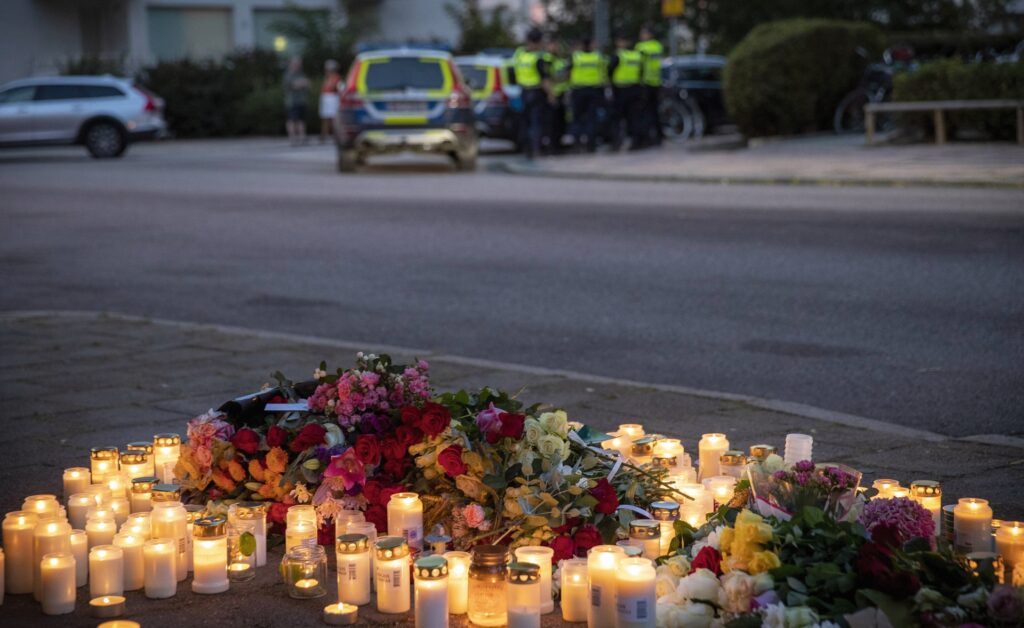
Eskilstuna, a small town 90 kilometers from Stockholm. It is Friday evening and at least forty people, many of them children, are in the playground when the shooting begins. It is the ninth this year in this area. A woman shields her daughter and is herself hit by the bullets. A five-year-old boy is also seriously injured. Collateral damage. Just another shooting in one of all the escalating gang wars that have now become commonplace in Sweden.
imago images / TT
A formerly peaceful country today stands out in Europe with a record of deadly gang violence that also affects the innocent. 2022 looks set to be the deadliest year since the police began keeping special statistics on confirmed shootings in the country in 2016. Why does Sweden stand out? I dare say the problems are largely due to political paralysis. Society is unable to adopt the methods required to stop the violence.
Despite the fact that most gang-related murders occur among young men from non-European countries, large parts of the Swedish establishment refuse to acknowledge what all the facts point to: That the problem is rooted in the emergence of parallel societies and an explosive growth of foreign criminal clans that do not respect Swedish law but has its own legal systems in its shadow society that the Swedish authorities have no insight into.
A secret intelligence report from the police lists 36 criminal family networks. A number of them are well established in Sweden and have been criminally active for a long time, often 30–35 years. The largest families have strong branches abroad to countries such as Denmark, the Netherlands and Germany.
In terms of lethal violence with firearms, Sweden is today very high in the European rankings, with around 4 deaths per million inhabitants (compared to other countries' average, it corresponds to around 1.5 deaths per million inhabitants). No other country in the study shows increases comparable to that in Sweden. If you break down the figures for 20-29-year-olds (mainly men), the difference is significantly higher. 18 people die per one million inhabitants in the age group in Sweden. These figures caused the German newspaper Bild in October 2021 to name Sweden the most dangerous country in Europe. Unfortunately, there is a lot in this. Ten years ago, Sweden had about as much fatal gun violence as Germany - slightly fewer than two deaths per million inhabitants per year. England had less than one. During the 2010s, Germany and England experienced a decrease, while Sweden suffered a sharp increase.
Clan expert Per Brinkemo explains that the clans try to gain more power in Swedish society by exercising strong social control.
- They bribe geographical area that they believe they control. This behaviour is extremely serious. It does not fall under terrorism, but it almost has the dignity that this criminality is such a systemic threat. The message to the police and society is: "We do not ascribe any authority to you," he tells the TT news agency.
In recent years, gang wars have spread from Sweden's big cities to previously quiet small towns. Many residents no longer dare to go out. "It's worse than Iraq," says a resident in Eskilstuna. It is about conflicts over territory and drug sales. The gangs hire younger and younger people to kill, as minors are not of legal age. Earlier this summer, a notorious 31-year-old gang leader was shot dead at the Emporia shopping mall in Malmö by a 15-year-old, who at the same time shot and wounded a woman passing by. The dead man was a leading figure in the "Assassins" gang, and later a 40-year-old man was arrested for involvement in the murder. It was the 44th murder this year. Keeping count is difficult, at the time of writing we are approaching 50 gang murders in 2022.
How will it end? No one can answer today. The only thing we know is that it has become more common for someone to be shot to death than for a day to go by without a gang murder.