

 Meine Favoriten
 Abmelden
 Alle
Artikel online lesen
Alle
Artikel online lesen
 Weltwoche Schweiz

Whether an art, science or dumb luck, ceasefires de facto herald a cessation of hostilities. Data collected by the Uppsala University identifies 285 distinct armed conflicts having taken place since 1946 and a quick look at Wikipedia’s lists of wars makes for sobering if not depressive reading. A closer look reveals that a huge proportion of this post-45 fighting has raged outside of Europe and this protected insulation led many to naively (and arrogantly) believe until very recently that war in modern Europe was impossible since it had attained a higher level of civilisation etc. etc. Proof again that people don’t change, they die: the WWII generation with their blood and guts experience have permanently disappeared and the notion of war has morphed into a creature to quieted at all cost or a surreal video game which excludes terror and horror. During the Balkan Wars, many thousands of Europeans served as part of UN missions and humanitarian operations but shamefully never received any collective recognition nor appreciation for their efforts and in many cases, trauma. Sanitized.
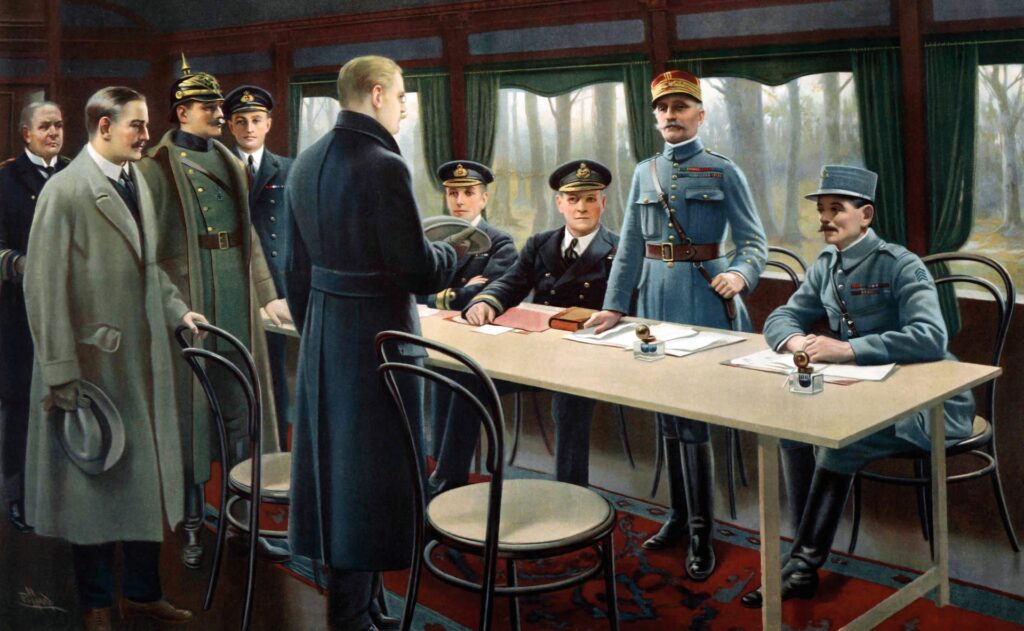
What makes the second 21st Century Ukrainian War appear so unique and “difficult” is that “we” are directly and/or collaterally implicated through geographical, political and material proximity, and not least managing the humanitarian and refugee challenges of millions of displaced persons. Furthermore, this war has resurrected “classical” large-scale warfare with its thousands of tanks and vehicles, artillery and rocket systems, trenches and large troop formations well as the indiscriminate targeting of civilians and non-military objectives. No romantic small unit superman special forces here.
The view from Africa, Asia and Latin America is obviously more distant and occasionally self-serving and opportunistic – the historical tables have turned. Yet, compared to past conflicts, the Ukraine War differs hugely in that the potential of direct nuclear confrontation has been threatened on and off, with or without hypersonic weapons. Is this a bluff or for real? Peter and the Wolf? In such a context of confusion and uncertainty, the Hobbit urge to grow vegetables in the Shire and dream the violence to go away could be tempting. The instantaneous Swedish and Finnish applications to NATO membership speak volumes about another reality – these two countries have no desire to invade anyone. In fact, after Napoleon and Hitler, no sane person wants to invade Russia. Ever. Switzerland’s repeated and public insistence on respecting the rule of law and territorial integrity is historical and self-interested because it’s the most basic guarantee that smaller states have in protecting their liberty and independence.
The desire for a ceasefire is understandable but who is promoting it most? Is it the battling Russians and Ukrainians or “we” the increasingly implicated backbenchers? Ceasefires don’t bring peace, mutual exhaustion and depletion of resources, or military victory do, but for how long? Does cease firing allow the parties to catch their breathes and start all over again? Ceasefires are a tool, not an end-all, they buy time, hope, perhaps for humanitarian operations to take place safely or to give diplomacy and negotiation a chance? Some questions need answering: would talks address “core” issues? Which core issues? Are previous arguments and declared positions smokescreens or real concerns and objectives? Do justifications and arguments become self-fulfilling prophecies? What’s needed to not lose face? Even now, after 11 months, do we know? Terminology has changed: special operation versus stop fooling around to produce more hardware? For Ukraine, survival is obviously the number one priority because it is ground zero, its cities and countryside are being reduced to rubble and wasteland, its people listen for warning sirens and live below ground. And what about Russia? Who’s Russia? Too many unanswered questions without which nothing can get started.
We need to accept that meeting, talking, or possibly negotiating is perceived as life threatening by those directly concerned because it might signal weakness. If you are winning, why talk? Dayton only happened because the fortunes of war changed dramatically against Serbia. Formal diplomacy was desecrated a year ago, used to mask invasion. Now nothing said or done is taken at face value because the risk of miscalculation is too high. Structured informality can lead to multiple lines of communication which need to be coordinated to reduce mixed messaging and misunderstanding(s). There is mediation competition however, the temptation of trying to win the Noble Peace Prize is irresistible.
As a rule, talks begin informally, under the radar, never openly. Reason? If they fail, nobody loses face, no prestige capital is squandered. Whether directly and/or with agreed third-party facilitators (maybe mediators), they help decipher the publicly shared ultimatums and declarations loaded with unacceptable demands, hard principles and so-called “red lines” (how red? blood red?) and what flexibility might exist to accurately uncover true priorities and develop a future negotiation agenda (or flight plan). But we are nowhere near there yet, at best talks about talks (already a miracle).
Any workable deal will need to meet the stress tests of not setting dangerous precedents, keeping internal cohesion because coalitions are facing off, defining historical “legacy” optics because so much blood has been spilled. If the current zero-sum context can successfully address legitimate security, longevity, and transactional concerns with incremental confidence and relationship-building measures (themselves negotiable items), then there is hope. But is there the will?
Mediators need to appear neutral and impartial and be believed to be so. I have often wondered who could have mediated Gulf War I – still looking. Key to 1992 Mozambican peace talks were Mozambican bishops trained in mediation (but fighting resumed in 2020). For someone profiling themselves (and by extension their institutional persona) to kick-start a negotiation process via mediation, the perception by the conflicting parties that this third-party actor (facilitator-mediator) is “sufficiently” impartial (i.e., that this resolution effort is not abetting and aiding the enemy), is key. Clearly some mediation superpowers (Norway, Sweden, Finland) are disqualified regarding Ukraine and hopefully Switzerland has a role to play. Or Uruguay. But the word “resolution” always scares me when referring to international conflict: whilst reaching some degree of mutual understanding to reduce the level of violence for a limited period is often doable, resolving the core contentious issues once and for all is the mediator’s Holy Grail. To gauge conflict resolution potential, five basic contextualised questions need to be answered:
- Do the disputants have the wherewithal to pursue their conflict indefinitely and what happens if they do/do not?
- Do the sides believe they can win unilaterally hence excluding negotiation and its joint decision-making character?
- What is the risk (reputational, strategic, etc.) for the conflicting parties to engage in conflict resolution processes? Why should they risk entering into a give-and-take negotiation environment?
- Does the third-party actor have leverage over the disputants to “encourage” them to engage in conflict resolution?
- Does the third-party benefit from sufficient trust and the perception of impartiality by those in conflict to perform operationally as a facilitator/mediator?
Depending on this basic analysis, one can determine whether a situation is “ripe” for possible conflict reduction and potential resolution.
Negotiation is never a level playing field in terms of the importance of the subject matter under discussion. There are always frontline states and/or actors whose interests are directly at stake. The elephants of the world are rarely if ever impartial (although for strategic reasons they may claim to be neutral) because given their size and their concomitant constituencies, whatever happens has direct implications “back home”. And they are competitors on so many levels outside of the pure conflictual one.
Over more than four decades of Cold War, multiple proxy wars raged across the globe. In Korea, Vietnam and Afghanistan, the superpowers funded opposing sides or fought directly against armed groups but never directly face-to-face. More recently, Iraq and Syria, proxies are proxies to other proxies. Sound confusing? It is. Most wars have involved outside “actors” either directly or indirectly committed, and not just states (please read between the lines) and they still do. Nothing really new here.
Ultimately, for a Ukrainian peace negotiation process to succeed, highly proficient negotiators who give it their all and have the power to deal deals (not micromanaged) will be needed. Contextually, the degree to which fortunes of war align with the (un)attractiveness of a negotiated deal, the command-and-control of those implementing on the ground, and who gets the black hat (there is always a loser, can they become spoilers?) will determine much. Not even the best “impartial” mediator can overcome such forces alone but at some point the shooting will need to stop. The devil is in the details.
Robert Weibel is CEO of the Centre for Experiential Negotiation and Applied Diplomacy (CENAD), Brussels. Over the course of his decades long career, Weibel has trained 30,000 public and private officials from 180 countries in the art of negotiation. Weibel is Professor of Practice at the Geneva Graduate Institute, Universities of Geneva, Bern, and the Vienna Diplomatische Akademie.