

 Meine Favoriten
 Abmelden
 Alle
Artikel online lesen
Alle
Artikel online lesen
 Weltwoche Schweiz

Every few decades, America catches a fever. It’s not the kind that sends people to hospitals; it’s the kind that sends them to microphones. We start believing again that someone, somewhere, an expert, a czar, a council, knows better than we do how to live our lives. And so, we hand over the steering wheel. We hand it to professors, to pundits, to bureaucrats in nice shoes. We let them build what they call “systems”, complicated machines made of jargon and committees. They say it’s all for our own good. But what they’re really selling isn’t policy. It’s complexity. That’s the product. Complexity justifies the expert. If the problem is too tangled for ordinary people to understand, then the man with the chart and the Harvard degree becomes indispensable. And for a long time, we bought it. We bought the story that life was too hard, too nuanced, too fragile to be managed without the enlightened class. We were told that common sense was a myth, that working people couldn’t possibly know how to fix the country they built. The message was simple: you can’t handle your own freedom — so we’ll handle it for you.
CAMERA PRESS
This is the great bait-and-switch of modern governance. The problem is never the thing itself; it's the management of the thing. You don't need a dam; you need a Water Resource Strategic Interagency Oversight Panel. You don't need a cop; you need a Community Safety and Holistic Wellness Initiative. The concrete reality is dissolved and replaced with an abstraction, and the abstraction is where the new jobs are, where the grants flow, and where the power collects. It is an industry built on the deliberate and profitable obfuscation of the obvious. For the priesthood of experts, every solution must generate three new problems, each requiring another layer of administrative oversight, more meetings, and a fresh supply of acronyms. Their true goal is not to solve the crisis, but to make the crisis their permanent home address.
What broke the spell
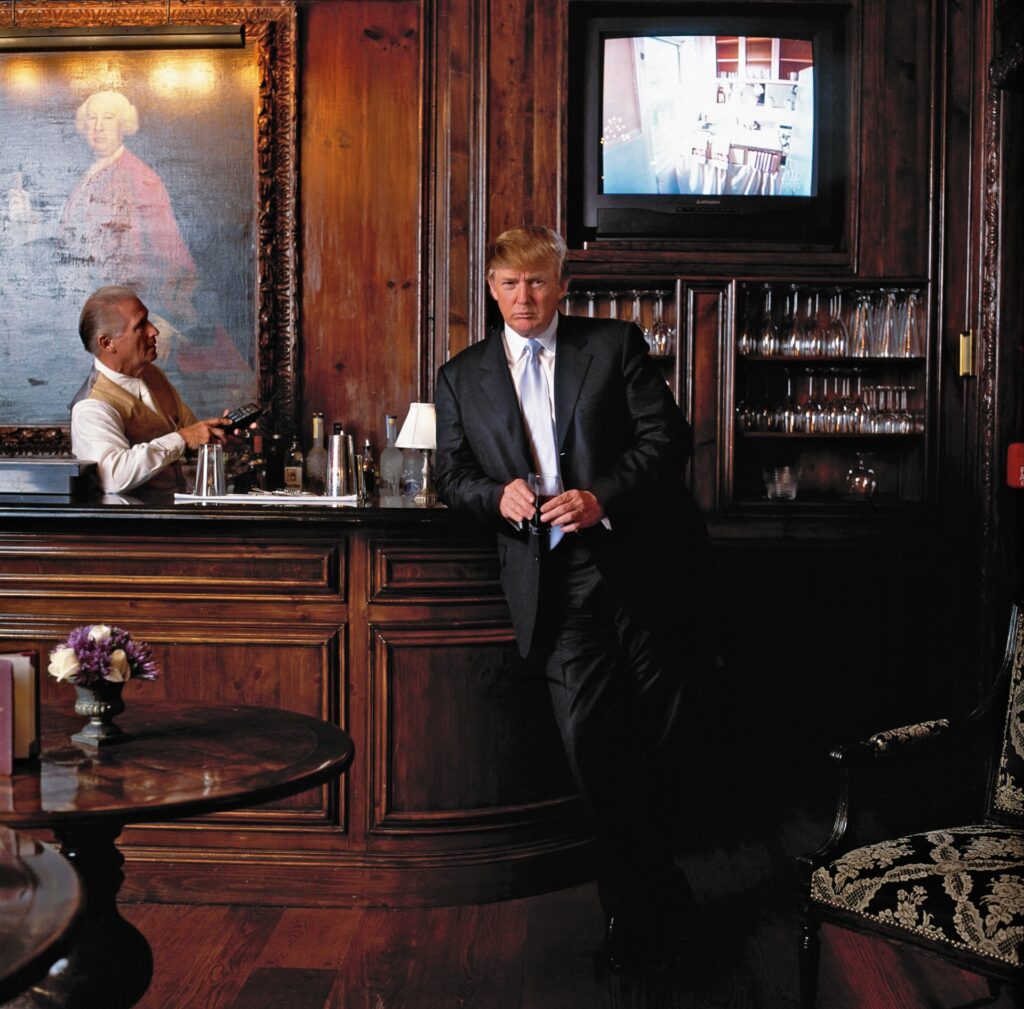
Then came the man who didn’t buy. Donald Trump is not a mystery. He’s a reaction, a market correction, if you like. For years, the ruling class sold a product called “complexity.” Trump showed up and said, “No thanks.” He didn’t believe in the sales pitch. He didn’t speak their language. He didn’t care about their etiquette. He stood there in his long tie and said the obvious things that everyone else was too scared to say. He called the media fake. He said the system was rigged. And even if people didn’t love him, they loved hearing someone finally say it. That’s what broke the spell. Because once you admit that the emperor’s clothes are imaginary, the whole parade starts to look ridiculous. The spectacle of a man refusing to play the game was, for the elite, a profound act of heresy. They had designed the game to be unplayable by anyone without their specialized training, their approved vocabulary, and their shared assumptions. Trump didn't just break the rules; he acted as if the rules were beneath his notice, like a contractor walking through a museum and pointing out that the fire suppression system is inadequate. His simplicity wasn't a flaw; it was a weapon. It was the simple, sturdy language of a transaction replacing the convoluted, delicate language of a seminar. He spoke in primary colors in a world that insisted on a thousand shades of gray, and the people, tired of the nuance they couldn't afford, listened. They recognized the sound of a voice that valued getting the deal done over managing the optics of the process.
The so-called elites weren’t angry because the country was falling apart. America wasn’t falling apart, it was working, just not for them. What made them furious was that their authority was falling apart. Their monopoly on explaining things. The professors, the consultants, the fact-checkers, they’d built careers on the idea that the average citizen is too dumb to manage his own life. Suddenly, a guy who builds skyscrapers and talks like a construction foreman becomes president, and the whole priesthood loses its mind. Because he ruined the brand. He made the product-complexity-obsolete. The outrage wasn't political; it was professional. Their expertise, their one marketable asset, was devalued overnight. Their degrees, their think-tank fellowships, their access to the green rooms, all of it relied on the public's acceptance of an unsolvable problem. If the problem could be fixed with a straightforward decision and a clear goal, then their job, which was to manage the problem into perpetuity, vanished. They saw him not as a political opponent but as an economic threat, a saboteur of the lucrative administrative state. Their anger was the screech of a monopoly losing its exclusive patent. This explains the sheer, personal venom: he didn't just disagree with them on policy; he dared to suggest that their entire vocation was an unnecessary detour.
He didn’t create chaos. He revealed it
Let’s be clear: Trump didn’t create chaos. He revealed it. He’s like the guy who walks into a fancy restaurant, lifts the tablecloth, and says, “You’ve got rats under there.” The waiters are horrified, not because he’s wrong, but because he’s right in front of the customers. That’s what offends the “respectable” crowd. Not the corruption, the exposure. They call him vulgar. Of course, he’s vulgar. Vulgar means “of the people.” That’s literally the definition. He’s not supposed to sound like them. He’s not supposed to know the right words or apologize for the wrong ones. He’s supposed to remind them that the country doesn’t belong to the commentators, it belongs to the citizens. And that’s the unforgivable crime. The elite's horror at his language is a mirror of their horror at the common man's participation. They equate polish with competence, and rudeness with inability. Their good manners are not a moral code but a security system, a way to keep the unvetted, the uninvited, and the uncredentialed from the levers of power. When they accuse him of poor taste, what they are really saying is, “You do not belong in our house.” But the people who elected him understood that. They weren't voting for a master of protocol; they were voting for a disruptor who would violate the protocols that had kept them voiceless. They saw his crudeness as a badge of authenticity, a deliberate refusal to assimilate into the class that had been looking down on them for decades. He gave permission for millions to stop speaking in the polite, self-censoring whispers demanded by the guardians of culture and to start shouting in the unvarnished vernacular of the street, the factory, and the kitchen table.
We live in a culture built on apology. Every commercial, every award show, every college lecture is an act of penance. We apologize for our success, our history, our privilege, our air conditioning. But guilt is a business model. If they can convince you that your freedom is stolen property, they can tax it. They can regulate it. They can shame it until it looks like compassion. Trump refused the penance. He walked into the confessional and said, “No sin today.” And that, not the tweets, not the policies, not the noise, that’s what made them go berserk. Because his refusal exposed their hustle. The entire industry of moral management runs on guilt. Take that away, and the experts go out of business. The industry of moral management is a vast, self-perpetuating bureaucracy of shame. It requires a constant supply of sinners, and if the existing sins are insufficient, it invents new ones: unconscious bias, microaggressions, historical privilege. This moral inflation ensures that the price of absolution, which is paid in compliance, deference, and the surrender of one's own judgment, never drops. The expert is the only one authorized to administer the sacrament of sensitivity. Trump’s simple, blunt refusal to play the role of the contrite sinner was an existential threat to this whole system. It was the sound of a cash register closing on an entire economic sector. He didn't just say, "I'm not guilty." He said, "Your power to declare me guilty is an illusion." He denied the premise, and in doing so, he defunded the priests.
“Freedom” becomes “equity”
Language is where the disease shows up first. Watch how words mutate. “Poor” becomes “disadvantaged.” “Freedom” becomes “equity.” “Citizen” becomes “stakeholder.” The trick is always the same: replace the clear with the abstract, and you can sell anything. If a man is poor, you can help him, lend him a hand, offer a job, teach him a trade. But if he’s “oppressed by systemic inequity,” suddenly you need a task force, a grant, a lifetime of conferences, and nobody’s ever cured. Complexity is profitable. Clarity isn’t. The linguistic disease is an act of intellectual gentrification. It takes a solid, working word, a word with edges and a single, hard meaning, and replaces it with a softer, vaguer term that can be manipulated to mean whatever the speaker needs it to mean. "Fairness" is an old word that implies an equal playing field; "equity" is a new word that implies an unequal distribution managed by an administrator. The word "justice" used to mean a verdict; now it means a process. The language of the expert must be deliberately muddy, because the moment the water is clear, the expert's role as the indispensable interpreter is over. This is why the best policy paper is one that takes an hour to read and leaves the reader more confused than when they started. The goal is to establish a permanent tollbooth on the road to understanding, with the expert holding the ticket booth.
What’s happening in America now is a tug-of-war between two languages, the language of work and the language of talk. The language of work says: Fix the damn pipe. The language of talk says: Let’s form a committee on water equity. The worker wants to get home by dinner. The talker wants to stay on TV. The worker measures success by results. The talker measures it by attention. And for the first time in a long while, the workers have started to realize that they don’t need permission to be right. That’s the real revolution— not riots, not hashtags, not slogans. Just the slow, steady return of common sense. The fundamental conflict is one of measurement. The language of work is beholden to reality. The pipe either leaks or it doesn't. The house stands or it falls. These are binary, non-negotiable outcomes. The language of talk, however, is only beholden to agreement. Success is measured by the quality of the press release, the elegance of the mission statement, or the applause at the panel discussion. It is a closed loop where the talkers validate each other, insulated from the gritty feedback of the physical world. The worker knows the cost of a mistake is a busted boiler and an angry customer; the talker knows the cost of a mistake is often a book deal, a fellowship, or a lucrative consulting gig. When the workers saw Trump reject the talkers' entire framework, it was a moment of profound recognition. They realized they didn't need to learn the talkers' language to be credible. They only needed to point at the unfixed pipe and say, “This is not working.”
The country was already divided
People say Trump divided the country. I think the country was already divided —between those who make things and those who make rules about things. He didn’t invent the division; he clarified it. He tore the wrapping off. He said, “Look, here’s the deal: the people who fix your cars, build your homes, and grow your food are treated like fools by people who haven’t built anything but PowerPoints.” You may hate his tone. Fine. But at least it’s a tone you understand. He doesn’t talk like a think tank. He talks like a guy trying to close a deal. It’s not polished, but it’s real. And real is a rare commodity in a culture addicted to theater. The division he exposed is the rift between production and administration. The people of production, the welder, the farmer, the truck driver, operate on the principle of making. They are necessary, but they are also inconveniently physical. The people of administration, the analyst, the diversity officer, the grant writer, operate on the principle of managing. They are abstract, and their value is derived from the difficulty of their language and the invisibility of their work. The production class is held in contempt by the administrative class, not because they are uneducated, but because their work is too simple to justify the administrator's salary. Trump, in his persona as the ultimate deal-closer and builder, served as a translator, a bridge, between the forgotten language of the factory floor and the high rhetoric of the presidency. He may have sounded like a bull in a China shop, but to those outside the shop, the sound was that of the unnecessary China finally breaking.
The American Left has built its entire modern identity around managing fear, fear of climate, fear of offense, fear of capitalism, fear of the other side. Fear justifies control. And control justifies careers. But fear has an expiration date. People eventually get tired of being scared. They want to get back to work. They want to raise their kids without filling out a moral survey. They want to say what they mean without a seminar about privilege. The anti-politician, and Trump is the prototype, offers relief from that exhaustion. He says, “You’re not crazy. The world is upside down. And you don’t need permission to notice.” That’s all it takes to break a spell. Fear is the ultimate sales tool for the control-minded elite. It is the fuel of the administrative state. The worse the perceived crisis, the more immediate the threat of existential, planetary, or social collapse, the more urgent the need for an unelected, omnipotent authority to step in and manage every aspect of life. This strategy shifts the conversation from what can be done (a practical, outcome-based discussion) to what must be surrendered (a moral, compliance-based discussion). Every new regulation, every expansion of the federal bureaucracy, every new speech code is prefaced with a warning of impending doom. The anti-politician’s appeal is the appeal of the man who says, "The monster isn't real, and if it is, it's not our boss." He is the antidote to the professional panic-monger, offering not a policy, but a simple, liberating mood, the mood of a person who has decided they are done being managed. This emotional and intellectual clarity is what the managerial class cannot tolerate, because it is impossible to manage a population that is no longer afraid.
The plumber knows when he’s wrong
Here’s the thing nobody in the polite world will admit: Americans don’t hate experts because they’re smart. They hate experts because they’re smug. The plumber knows when he’s wrong. The professor never does. That’s the difference. The plumber’s mistakes leak water. The professor’s leak culture. And when you’ve lived long enough under the supervision of people who never admit error, you start rooting for the man who calls their bluff, even if he’s loud, even if he’s crude. Because the louder he gets, the more obvious it becomes that the emperor’s committee is naked. The professor, cloistered in the academy, operates in a world where mistakes are called "revisions" or "new theories." They have tenure, which is the institutional guarantee of immunity from consequence. The plumber, by contrast, operates in the merciless glare of a consumer economy. If the toilet backs up at 3:00 a.m., his mistake is immediately and painfully evident to his client, and his reputation, his livelihood, and his schedule suffer for it. The expert class is not accountable to the outcome, only to the process. They can implement a disastrous policy, write an op-ed defending it, accept a new grant to study the failure, and then pivot to lecturing the public on their lack of compliance. It is this fundamental lack of skin in the game—this complete divorce between intellectual action and material consequence, that breeds the smugness that is so infuriating to the working citizen. The working class understands that a true expert is someone who has been proven right by reality, not by a committee. It’s easy to dismiss this as populism. But populism is just democracy without the middlemen.
When you strip away the consultants, the lobbyists, the pollsters, the “community engagement strategists,” what’s left is the actual country, people who still believe that right and wrong are simpler than we’ve been told. They don’t need to be taught how to live. They need to be left alone long enough to do it. The bureaucrats call that dangerous. I call it freedom. The middleman class, the vast ecosystem of non-producers who insert themselves between the citizen and their government, functions as a deliberate friction generator. They are paid to complicate, to moderate, to filter, and ultimately, to dilute the clear voice of the people. Populism, in this light, is not an ideology; it is a design principle, a demand for the return to a direct, unmediated relationship with power. It is a rebellion against the process, not the politics. When the people say they want "fewer rules," they are not asking for anarchy; they are asking to fire the 80% of the bureaucracy whose sole function is to justify their own existence by creating the rules. The elite’s horror of populism is, therefore, a horror of being rendered redundant. It is the middleman who stands most to lose when the transaction becomes simple and direct. The demand for the "messy, loud, beautiful experiment" of democracy to run without a babysitter is the demand for sovereignty, the right to suffer the consequences of one's own decisions without administrative interference.
Dust cloud after the demolition
Now, none of this means Trump is perfect, or that his style should be copied by saints. He’s not a philosopher. He’s not even a politician. He’s a wrecking ball. But sometimes you need a wrecking ball. Because before you can rebuild a house, you have to knock down the parts that are rotten. And that’s where America stands right now: in the dust cloud after the demolition, staring at the exposed foundation, trying to remember how to build. The wrecking ball, by its nature, is not subtle. It cannot engage in nuanced negotiation with a load-bearing wall. Its purpose is to destroy the structures that have become too fragile, too corrupted, or too dishonest to stand. The complaints about his lack of tact, his lack of finesse, or his lack of intellectual rigor are fundamentally irrelevant to his primary purpose. You do not critique the moral character of a surgical blade before it removes a tumor; you judge its effectiveness. The necessary demolition of the managerial class’s authority required a tool that was equally blunt and uncompromising. The dust cloud is uncomfortable, it obscures the vision, and it makes people cough, but it is the necessary precursor to new construction. The next phase is the hard part, the building, but the first, necessary step was the uncompromising act of clearing the ground, of exposing the rotten foundations that the experts had spent decades hiding beneath layers of complexity and smooth-sounding rhetoric. The great service of the anti-politician was not the policies he advanced, but the clarity of the destruction he wrought.
The media still doesn’t get it. They think if they just scream louder, if they add more adjectives, more outrage, more op-eds, they can shame people back into obedience. But shame has lost its grip. The public has learned the trick. They know that when a man on television says, “That’s dangerous,” what he usually means is, “That threatens my job.” And once you see the hustle, you can’t unsee it. That’s why the lectures don’t land anymore. That’s why the moral scolding sounds hollow. The customer walked out of the store, and the salesman is still shouting into the empty aisle. The public's relationship with the media has transitioned from one of passive consumption to one of hostile deconstruction. The citizen no longer hears the content of the broadcast; they hear the intent behind the broadcast. Every tearful editorial, every panel of concerned experts, every solemn pronouncement of an impending "crisis of democracy" is now decoded as a desperate attempt to regain control of the narrative, to haul the customer back into the store. This failure is a catastrophic business model collapse for the informational class. Their product—managed reality, is being rejected in favor of raw, unmediated experience. They mistake the public's defiance for ignorance, when it is, in fact, an advanced form of literacy: the ability to read the financial motive beneath the moral sermon. The old game of shame and control is over, and the only ones who haven't received the memo are the ones whose salaries depend on the game continuing.
Democracy doesn’t need a babysitter
Here’s the irony: for all the talk about “democracy dying in darkness,” what’s really dying is the idea that democracy needs a babysitter. The American system — this messy, loud, beautiful experiment, was designed to run on distrust. The founders didn’t believe in angels. They believed in ambition checking ambition, greed checking greed. The modern elite believes in management. They think if they can just design the right spreadsheet, they can fix human nature. But human nature isn’t a software bug. It’s the operating system. And Trump, for all his flaws, ran on the original code. The founders’ system was predicated on a deeply cynical, realistic view of man: that he is flawed, self-interested, and capable of both greatness and depravity. Their solution was not to install an "enlightened class" to purify him, but to install a structural friction, a system of checks and balances, to prevent any single flaw from becoming tyrannical. The modern elite, however, suffers from the delusion of the perfectible human and the perfectible system. They see the Constitution not as a set of guardrails but as a collection of historical errors to be patched, updated, and ultimately replaced by their own superior, spreadsheet-driven design. They want a frictionless democracy managed by credentialed angels. But democracy, by its nature, is supposed to be loud, chaotic, and inefficient. It is supposed to be a constant, messy fight. The anti-politician, by running on the original code of self-interest and unvarnished ambition, reminded the country that the system wasn't built for harmony; it was built for endurance through conflict.
The good news
So where are we now? We’re in the middle of a fight between reality and performance. Between the people who live by outcomes and the people who live by optics. The good news? Reality always wins in the long run. Because it’s the only thing that can. The bad news? It usually takes a collapse for people to remember that. The experts built a tower of theories so tall they can’t climb down without losing face. So, they’ll keep preaching from the balcony until it crumbles. And when it does, the people with dirt under their nails will be the ones still standing. Because they were never up there to begin with. The tower of theory, the bureaucratic edifice of complexity, jargon, and managed morality, is inherently unstable because it is not connected to the actual bedrock of reality. It is a structure built on belief, not on material fact. The people who built it, the administrative class, cannot survive its collapse, as their entire identity is tied to its height and complexity. But the working man, the one who lives on the ground, who deals with the unyielding laws of physics and economics every day, merely has to wait for the inevitable gravitational correction. The noise and the performance from the balcony will continue, but the audience knows it's the sound of a desperate, final act. The era of performance is ending, and the era of consequence is beginning. The curtain’s down. The lights are on. The audience isn’t booing, they’re leaving. They’re done with the show. Now we’ll see who can actually build something, not just talk about it. That’s the real state of the union. And it’s not despair. It’s opportunity. The end of the script is just the start of the work.
David Mamet is a Pulitzer Prize–winning playwright, screenwriter, and essayist. His most recent book is The Disenlightenment: Politics, Horror, and Entertainment. He writes frequently about culture, politics, and the language of power.