

 Meine Favoriten
 Abmelden
 Alle
Artikel online lesen
Alle
Artikel online lesen
 Weltwoche Schweiz

Those who wonder why and how we - the Sweden Democrats - were so successful in the last parliamentary elections must first face the unsettling and disturbing truth that this seemingly idyllic Scandinavian country is not the carefree place anymore, most Europeans imagine it. Sweden is no longer a fairy tale by Astrid Lindgren or a Social Democratic Utopia of the Seventies. It has alas become a place, where not in the periphery but in its suburbs, attacks with guns, bombs, and grenades are now and have been for more than a decade a very usual occurrence as if they were pub brawls.
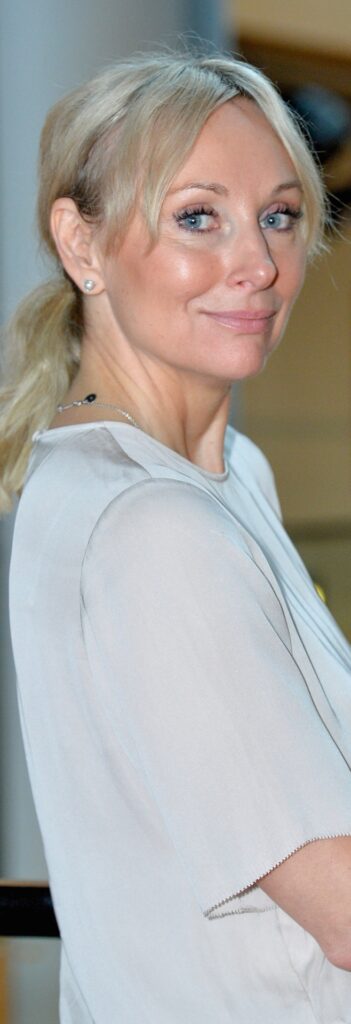
© European Union 2019 - Source : EP
Only the Sweden Democrats were prepared and willing to look at this astonishing state of affairs in more and more Swedish cities, to name these problems and then to put them in an uncomfortable context of a migration policy without any structure or control. The Sweden Democrats were the first ones who saw it clearly and voiced concerns equally clearly. Today this insight is more broadly shared, but when the party started raising concerns, they broke with a powerful taboo. And it took years and years before the worst sort of herd instinct, strict gauche morality and eager political correctness allowed reality to dribble in.
Telling an uncomfortable truth often does not make oneself too popular. It is a bit like warning your best friend better not to "marry that woman" shortly before the wedding and confronting this friend with her big drinking problem and her gambling addiction. "Having been right" then often seems unsympathetic at first and it takes a lot of courage to do so. We - the Sweden Democrats - had this courage when we started to name the problems of the country, a country that puts such massive emphasis on consensus and harmony.
The Swedish migration policy was supposed to be a role model for the continent, it was supposed to be different to France’ with her banlieues of frustrated youth of Northern Africa, better than Germany’s and her “Parallelgesellschaften”, it was supposed to work as the Swedish welfare state in total. Failure was therefore impossible to conceive. Discrepancies were faded out; George Orwell comes to mind: "To see what is in front of one's nose needs a constant struggle". We all know that phenomenon from our daily lives and to be honest it can be comfortable to give in for a short while. However, Swedish politics, out of ideological stubbornness, complacency and also despondency, has simply closed its eyes too tightly and far too long, because “what must not be, cannot be”.
Opening the eyes, providing a clearer view is already a historical merit of the party against hefty and heavy resistance. When we gained our first seats in the parliament in 2010 and dared to declare the Swedish migration policy as what it is, a massive well-meant failure, we were attacked in the harshest and crudest ways not only by political rivals but by the entire media and potent actors within civil society. These hostilities often went far beyond acceptable political discourse, but were often overly emotional, personal and from time to time even violent – in Sweden! Most political parties were satisfied with condemning us for naming the problems instead of analysing and dealing with them. In this way, they not only cemented the status quo, but ignored it and contributed enormously to the quickly growing problems in suburbia.
When the former Swedish Prime Minister, Stefan Löfven, was confronted in an interview with the exploding violence in suburbs dominated by migrants, he at least answered partially in truth: "We did not see it coming", he muttered in despair. Yes, because he and his party comrades refused to look.
So how has Sweden changed? A few decades ago, Sweden was a very ethnical homogenic country. In 2021, almost a third of the population had a foreign background. Furthermore, if you look into the most criminally active group, men aged 15-44, almost 40% has a foreign background. So why is this so problematic? According to statistics almost 30% of men (first or second generation) from Africa and Western Asia (the Middle East) are criminal suspects. Six times higher than ethnical Swedes. Swedish authorities estimate that men aged 15-44 from Africa and Western Asia will be doubled in 2029. The numbers says it all.
So while the Swedish Social Democrats "did not see it coming", we stood not only for a different migration debate, but also for a different climate and energy policy. Thereby not denying the dangers of climate change, but approaching them less hysterically and with a sober view for the long-term goals and the short-term effects – particularly for the citizens with not unlimited means. As with migration policy, energy policy should be characterised by foresight. Hectically changing the course and useless virtue signalling is expensive and harmful and does certainly not help the climate.
It was not Putin's terrible war, but the government's failures in the years before, not to maintain one of the best and cleanest energy mixes in the world, but to put Sweden electricity supply abruptly on shaky ground without need. But at the latest with the Ukraine war, more and more became aware of these wrong decisions. While many industrialised countries were relying on climate-friendly nuclear power in the fight against global warming, the government wanted to switch the power supply to wind and sun without any holistic assessment.
Politicians of all other parties kept stressing that efforts to reduce CO2 emissions had to be accelerated: more wind power with a rapid nuclear phase-out, an early cut-off from the internal combustion engine, even higher CO2 prices, resulting in an immense restructuring of the economy and society. Mantra-like; More, more, more of the same and faster, faster, faster.
Again, the Sweden Democrats "saw it coming", dared to disturb the harmony and raised some vital questions. Achieving a stable and a cheap and a clean energy mix without nuclear power is – to say the least – very, very difficult. It is still too often pretended that the climate policy challenge justifies any use of resources. Instead of the most efficient measures, the government preferred to implement the most expensive ones. There is something fundamentally wrong if one has to worry about blackouts in the face of swiftly rising electricity prices, due gigantic public expenditures in renewable energies.
With the influence gained through the Riksdag election comes more responsibility: It is high time for a new start in Sweden with controlled migration, effective crime fighting and ideology-free but secure, stable and sound energy politics. The growing success of the Sweden Democrats is a victory for democracy, which can only be resilient and enduring if it is also capable of criticism. It is a chance for Sweden to learn from its mistakes, instead of stubbornly refusing to do so.
The Sweden Democrats have given the country a new set of glasses, we now can see clearer and more precisely. We have raised the problems and are ready to now tackle them, within government or as a compass outside a coalition. After years of unnecessarily induced crisis and decline, Sweden now has an opportunity to turn things around for good.
Jessica Stegrud is member of the Sweden Democrats (SD). After a career as business controller in the energy industry, Stegrud became a member of the European Parliament for the SD. In September 2022 she further won a seat in the Sweish national parliamet Riksdagen.