

 Mes favoris
 Se déconnecter
 La Weltwoche


There was a time when shame had a function. It was the handbrake on civilization — the invisible fence around appetite, the tremor that reminded man he was not an animal. You did something cruel, you felt it. You lied, you burned inside. You betrayed, and something in you flinched. That flinch was the beginning of morality, the faint echo of a conscience that tethered impulse to consequence. Now the flinch is gone. Today’s citizen does not blush; he brands. He turns guilt into content and vice into virtue. The blush that once signaled conscience has been replaced by the grin of self-promotion. We live in a world that no longer hides its sins; it syndicates them. The result is not freedom, but chaos disguised as confidence, a culture that praises its own decay for the ratings. We have learned not merely to live with the lie, but to polish it, to market it, to stream it live.
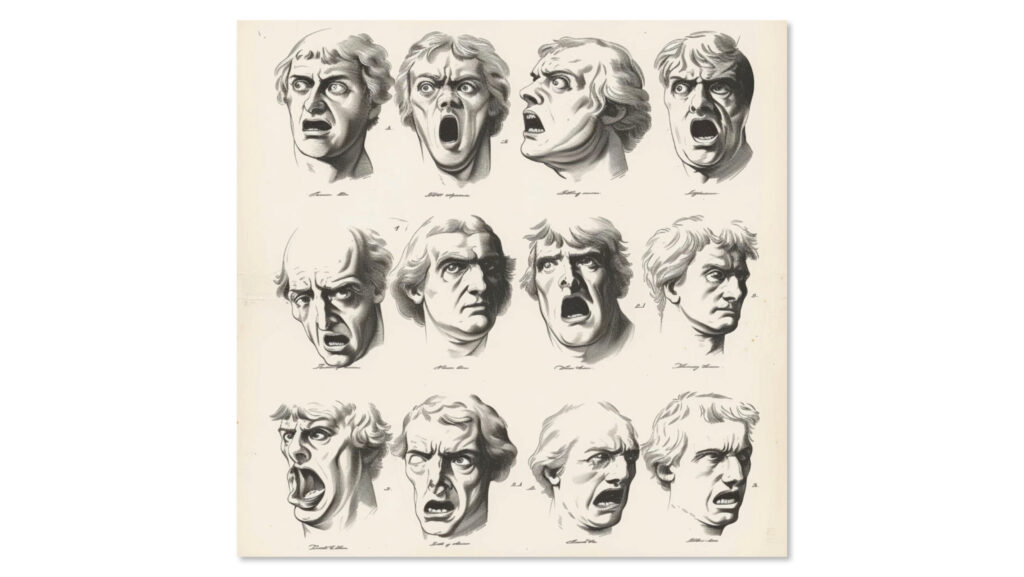
Sacred lines
Once, shame was a companion. It didn’t cripple a man; it corrected him. It was the small voice that asked — do you really want to be that guy? It reminded him that honor was not a myth and dignity was not negotiable. It was not imposed by law or decree but by upbringing, the slow, invisible work of family, religion, and community. A boy was taught that certain lines were sacred, not because someone was watching, but because God was. A woman carried herself with restraint, not out of fear, but out of respect for herself and others. Then, sometime between the sexual revolution and the smartphone, we decided shame was oppression, that moral restraint was a prison and exposure was freedom. Every generation wants to throw off something; ours threw off the last thing keeping us decent. We didn’t abolish shame overnight; we industrialized its opposite. We built a culture that monetized attention, and attention loves outrage, spectacle, and nakedness, of body, of mind, of principle. The loudest voices became moral authorities. The more you revealed, the more “authentic” you appeared. And authenticity, in a society that confuses emotion with truth, became the new currency of credibility.
Repentance, once a private ordeal, has become public entertainment. A man no longer confesses to God or to his wife; he confesses to the timeline. The repentant sinner now has a press team. His crisis is branded; his apology subtitled. The language of contrition, once trembling, personal, whispered, has been retooled into the slogans of self-help: I’m learning. I’m growing. I’m listening. The truest phrase in English, I was wrong, has vanished, not because we lost the words but because we lost the humility. The influencer weeps into the camera. The politician tweets his regret between fundraisers. The actor accepts an award for “owning his mistakes.” And the crowd applauds, as if remorse were performance art. But confession without cost is just performance. A healthy culture needs shame as the body needs pain, the signal that something’s gone wrong. Remove it, and you remove the feedback loop that keeps behavior in check. Shame is not censorship; it’s conscience. It’s the moral echo that prevents repetition. Civilization, stripped of shame, becomes a stage play with no fourth wall, everyone performing, no one listening. Our ancestors feared public disgrace not because they were fragile, but because they were connected.
Confession is content
Now, in the age of atomized individuals, the only ecosystem is personal branding. You don’t have to live well; you only have to look good doing it. The image replaces the act, the caption replaces the deed. The result is a people fluent in self-advertising but illiterate in self-reflection. We live as billboards for lives that do not exist. The more curated the persona, the more hollow the soul behind it. Nowadays we do does not worship God; it worships the Self. Its cathedral is the smartphone screen. Its liturgy is the post. Its priesthood is the influencer class, and its gospel is visibility. The old religion taught restraint: deny yourself, serve others, pursue virtue. The new religion teaches performance: express yourself, serve your image, pursue validation. The soul that once looked upward now looks outward. In this faith, guilt is not to be cleansed but monetized. The confessional is now public, and absolution comes not from God but from followers. Forgiveness is measured in likes. The modern catechism preaches that to feel bad is weakness, that to blush is outdated, that moral discomfort is a flaw to be therapized. We’ve medicalized conscience and pathologized modesty. The very instincts that once built character are now treated as diseases of low self-esteem.
Digital identity has become a costume we wear until it becomes skin. The young man who performs virtue online will cheat in real life without contradiction, because one self exists for display, the other for indulgence. When exposure becomes habit, the interior life collapses. There is no room for conscience when every moment is curated for applause. Countries used to hide their depravity; now it puts it on Netflix. The culture that once celebrated redemption now celebrates transgression. The villain is the hero, the antihero the brand. We binge cruelty, laugh at deceit, call it “honest.” But complexity is not wisdom; it’s camouflage. We pretend to admire ambiguity because we no longer have the stomach for truth. The lie we tell ourselves is that art merely reflects the times, as if what we depict does not shape what we become. But we become what we praise, and we now praise the shameless. This is not art; it’s anesthesia. The endless parade of scandal and irony desensitizes us. We scroll past depravity with the same indifference we give to breakfast photos. Nothing shocks; nothing stirs. The senses, unguarded, rot.
The disappearance of shame has metastasized into politics. Once, a lie in public office was scandal; now it’s a skill set. To be caught deceiving was career-ending; now the only mistake is being caught badly. Politicians don’t apologize; they “clarify.” They don’t admit wrongdoing; they “misspoke.” They don’t resign; they rebrand. The electorate, numbed by repetition, treats dishonesty as theater. Every scandal becomes subplot, every lie a meme. The news cycle runs on performance, outrage, apology, repeat. Shame dies when the audience stops booing. The deeper danger is the erosion of moral vocabulary. We no longer speak in terms of right and wrong, but optics and narrative. Politics has become dramaturgy, not governance — a perpetual rehearsal where nothing is meant, only staged. The candidate who lies convincingly is praised for charisma; the one who tells the truth awkwardly is dismissed for lack of polish. The performance has swallowed the purpose. The young, poor creatures, have inherited this carnival. Raised on curated personas and filtered emotions, they’ve never known privacy, only exposure. They live in a world where confession is content and authenticity is algorithmic. They are told shame is toxic, judgment is violence, and everything is valid if it feels sincere. But sincerity is not morality.
To blush is human. It is proof one still has a soul. A man who cannot feel shame cannot feel pride, only hunger. The recovery of shame is not a return to puritanism, but to proportion: the understanding that freedom without virtue is suicide. A free people must be self-governing, and self-government begins with self-judgment. We do not need more laws; we need more conscience. We need the humility to say, “This is beneath me”. That phrase once built nations. Its absence is now destroying one. There is quiet heroism in restraint. The man who resists the urge to expose, to indulge, to declare — that man is free. He governs himself. In a culture of compulsive confession, restraint is revolutionary. There is dignity in silence, in the refusal to turn every wound into spectacle. The truly authentic person is not the one who reveals everything, but the one who knows what not to reveal. There is strength in privacy, in the secret kept, the impulse resisted, the virtue unadvertised.
Virtue demands sacrifice
To recover shame is to recover the soul. It begins in small awakenings, the uneasy twinge when we cross a moral line, the instinct to apologize not because it is strategic but because it is right. A nation begins to heal when its people rediscover the blush. To blush is to remember that there are eyes beyond our own, that life has an audience greater than the algorithm. It is to acknowledge mystery again, the existence of something sacred enough to offend. If a country like America is to recover, it must relearn the art of blushing. It must rediscover proportion, privacy, consequence. We must stop mistaking transparency for truth, confession for courage, shamelessness for strength. A civilization that cannot blush cannot last, because it cannot learn. To recover shame is not to regress but to remember. To blush again would be to recall that truth costs something, that virtue demands sacrifice, that decency is not performance but discipline. It would be to recall that freedom, without the ballast of conscience, drifts toward ruin. The recovery of shame is the recovery of scale —of knowing there is something higher than desire, deeper than ego, stronger than impulse.
About the Author:
David Mamet is a Pulitzer Prize–winning playwright, screenwriter, and essayist. His most recent book is “The Disenlightenment: Politics, Horror, and Entertainment.” He writes frequently about culture, politics, and the language of power.